
Systems built around how your business actually works
When standard CRM, ERP and SaaS tools no longer fit the way your business operates, we design systems around your workflows, data and teams rather than forcing your operations to fit the software.
Business complexity grows gradually
Growing businesses rarely outgrow their systems overnight. Complexity builds gradually.
New customers, services, team members, roles, documents, payments and exceptions are added over time. Some work stays within the CRM or ERP, while other parts move into spreadsheets, email, messaging apps and separate tools. Teams start transferring information manually and increasingly rely on people to bridge the gaps between systems.
Eventually, the problem is no longer one piece of software. The processes, data and systems no longer work together as one operational environment.
At that point, adding another tool may not solve the underlying problem. It may be time to rethink the operational system itself.
Signs that your processes and technology no longer align
- 01
Important processes no longer fit within one system
Some work happens in your CRM or ERP. The rest is managed through spreadsheets, documents, email and messaging.
- 02
Your team works around the limitations of the software
Workarounds, additional spreadsheets and manual steps appear because the standard workflow no longer matches how the work actually gets done.
- 03
Too much coordination happens manually
People chase statuses, move data between systems and rely on messages and reminders to keep work moving.
- 04
Critical knowledge sits with individual employees
Understanding what happened with a customer, order or payment requires more than checking the system. You need to know who to ask.
- 05
The business has changed, but the system has not
New services, roles, locations and exceptions gradually turn a once-useful tool into a constraint on further growth.
First, we work out what the system should actually do
Not every manual process should be automated. Not every exception needs to become a software feature. And not everything currently spread across several tools needs to be moved into one platform.
We look at how work moves from beginning to end: what information is needed at each stage, who makes decisions, where delays and errors occur, which rules can be standardised and where people still need flexibility.
Only then can we determine what should be simplified, automated or integrated, and what genuinely requires a custom system.
What the system can include
Operational core: ERP / CRM
Customers, orders, services, schedules, statuses and key operations are structured around shared workflows and a consistent data model.
Role-based workspaces
Operations, management, finance and other teams get workflows and information designed around what they actually need to do.
Business workflows and rules
Statuses, checks, approvals, restrictions and next steps become part of the system rather than relying on instructions, messages or individual memory.
Finance, payments and documents
Invoices, payments, balances, documents and related actions can form part of the same operational process rather than sitting in a separate workflow.
Integration with existing systems
If your accounting software, payment provider, website, CRM or another platform already does its job well, we can connect it to the wider process rather than replace it unnecessarily.
Operational reporting
Because data is captured as work happens, management can gain a clearer view of operations without repeatedly compiling information by hand.
The shape of the system follows the needs of the business. It may be an ERP, a CRM, an internal operations platform or a combination of connected components.
From understanding the business to building for change
- 01
Understand how the business operates
We examine how work happens today: customer journeys, team activities, data, existing systems, manual processes, exceptions and handovers between people and departments.
- 02
Design the target operating model
We determine what should be simplified, standardised, integrated or automated, then design the workflows, roles, data model and system architecture needed to support it.
- 03
Build in stages
We do not try to replace your entire operational infrastructure in one large launch. We prioritise the processes that matter most and introduce change in manageable stages.
- 04
Evolve the system with the business
A custom operational system does not have to become a finished, static project after launch. As new processes, roles and requirements emerge, its architecture and workflows can evolve with them.
An operational platform that evolved with the business
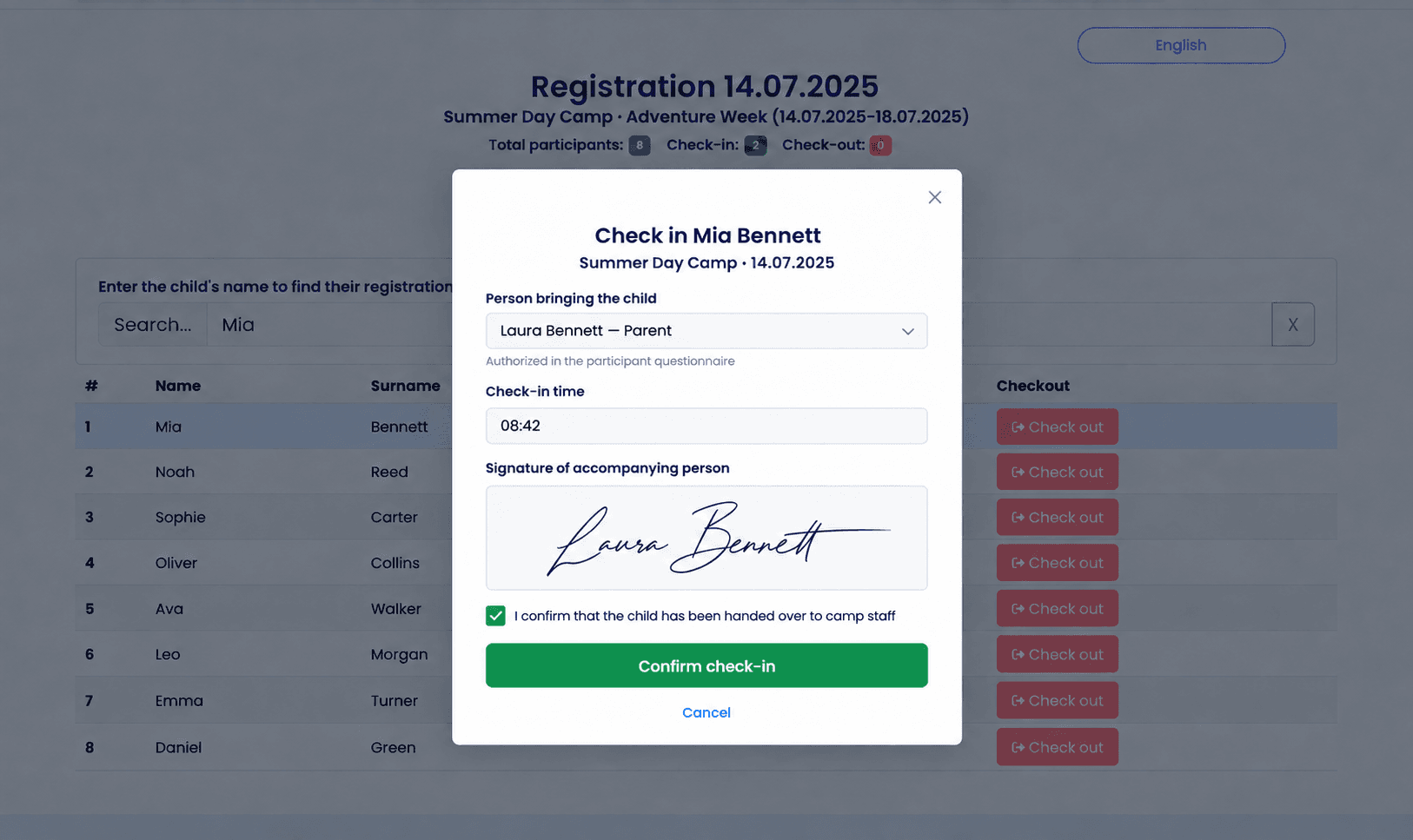
Aktivists’ internal system evolved from order management into an operations platform supporting bookings, payments, documents, participant data, check-in and the team’s day-to-day work.
As the business developed, new scenarios, roles and exceptions emerged. Our work therefore went beyond adding features. We revisited workflows, business rules and data structures so the system could continue to reflect how the company actually operated.
View case study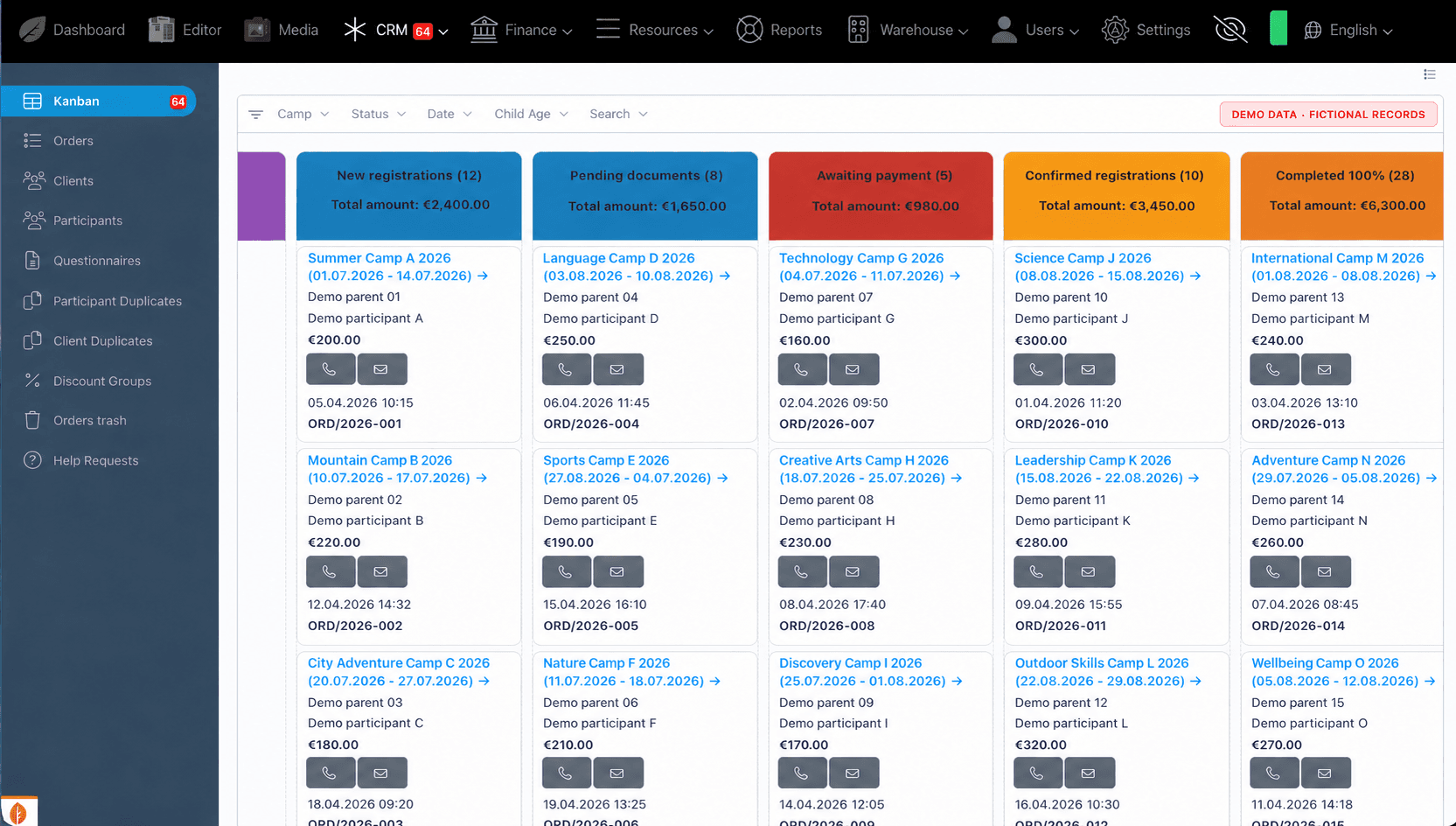
Bookings and participant data
A connected workflow from registration through to programme participation.
Payments and documents
Financial and document processes linked to the relevant booking and customer record.
Preparation and check-in
The system helps the team confirm that participants are ready before arrival and manage check-in without manually reconciling multiple sources.
Evolving architecture
New processes can become part of the existing operating model rather than creating another standalone tool.
Day-to-day operations become clearer and more resilient
Less work outside the system
Spreadsheets, messages and manual workarounds stop being a necessary part of standard operations.
Less manual coordination
Routine processes move through defined stages, with the system handling rules, checks and reminders where appropriate.
More consistent data
Information is created and updated as part of the operational workflow rather than repeatedly entered and reconciled across different tools.
Operational knowledge becomes part of the system
Rules, statuses and process steps depend less on the memory and experience of individual employees.
Better operational visibility
Teams and management can understand the state of operations without continually gathering information by hand.
A system that can evolve with the business
New services, roles and processes can be incorporated into the existing architecture as the organisation develops.
When does a custom system make sense?
Custom software is not the right investment for every business.
If your processes are relatively standard and an off-the-shelf CRM or ERP supports them without significant manual work, building your own system may add unnecessary cost and complexity.
A custom approach becomes more relevant when the limitations of your existing tools create ongoing operational overhead: teams maintain workarounds, data has to be transferred manually, important workflows cannot be automated, and growth continues to increase the burden.
If you are not sure whether your business has reached that point, Operational Discovery can help you establish it before committing to development.
Not sure what system you need?
You do not need to come to us with a finished specification. We can start with Operational Discovery: examining your current processes, systems and constraints, identifying where operational friction is coming from and determining which changes are worth making.
The outcome is a clearer view of what needs to change, in what order, and where technology can make a meaningful difference.