
Morning check-in01
Before
Minutes of manual checks for each child
After
→Seconds for a standard check-in
5+ readiness conditions checked automatically
Based in Latvia and welcoming children from 25+ countries each year, Aktivists needs more than a booking database. Over successive seasons, its ERP grew into a connected operational platform for documents, child data, payments, attendance, check-in and financial visibility.
Aktivists came to IC Studio with a custom ERP already in daily use. The task was not to replace it from scratch, but to understand the existing logic, unblock its development and preserve the processes the team already relied on.
Running camps for an international community adds detail to every application: languages, individual needs, documents, authorised adults and planned attendance all have to remain connected. The system had to absorb new requirements season by season without breaking the operational continuity around children and families.
Understand
Preserve
Rebuild
Keep evolving
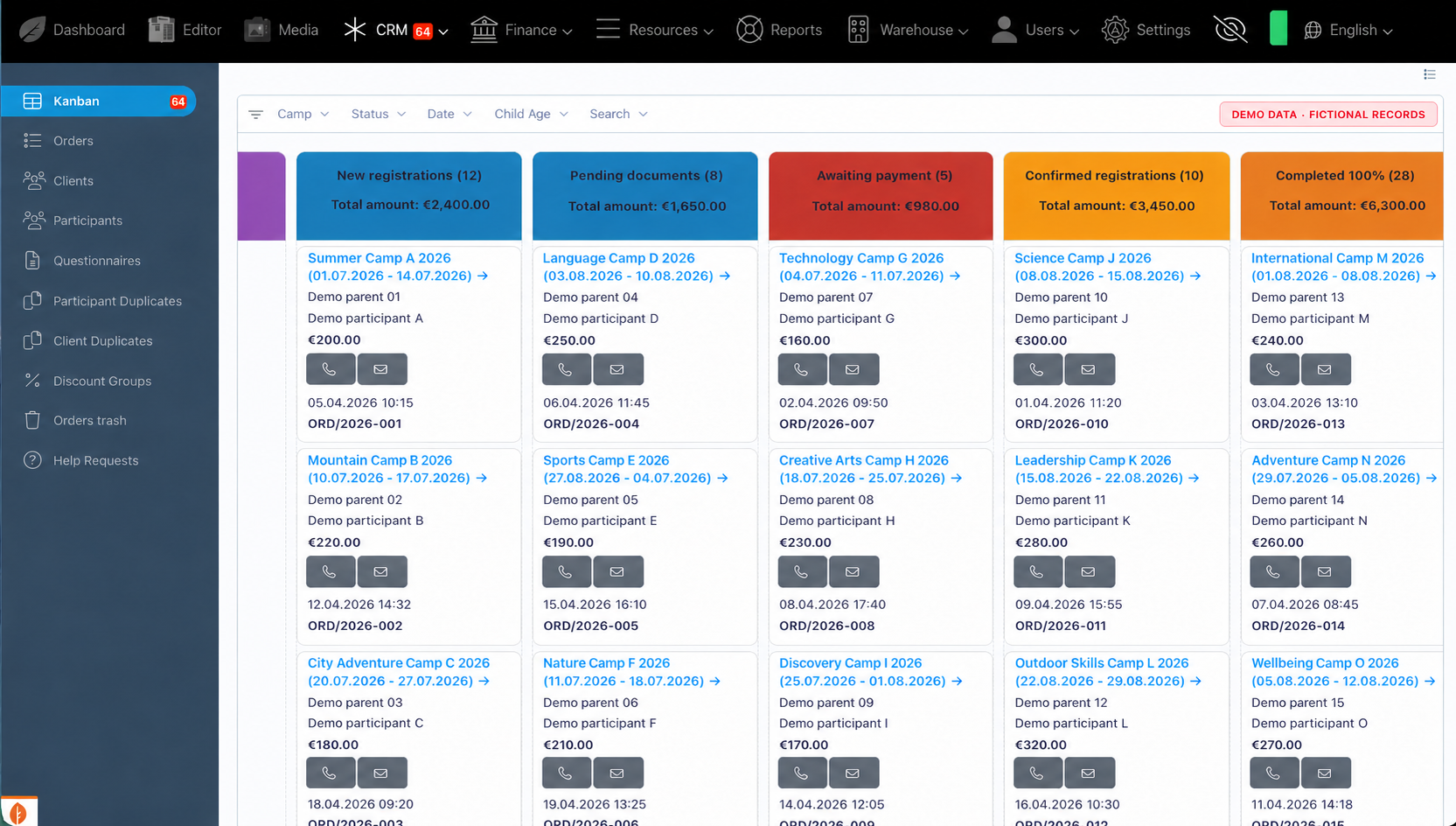
The Kanban made each application visible at its current stage — from documents still required and payments awaiting action to confirmed registrations. It became the operational core to which the later modules were connected.
Each stage began with a real operational constraint. The response was not a detached feature, but another connected part of the same working system.
These are operational transitions rather than invented performance percentages. They show what the team had to do before and what the system now handles or makes visible.
Minutes of manual checks for each child
Seconds for a standard check-in
5+ readiness conditions checked automatically
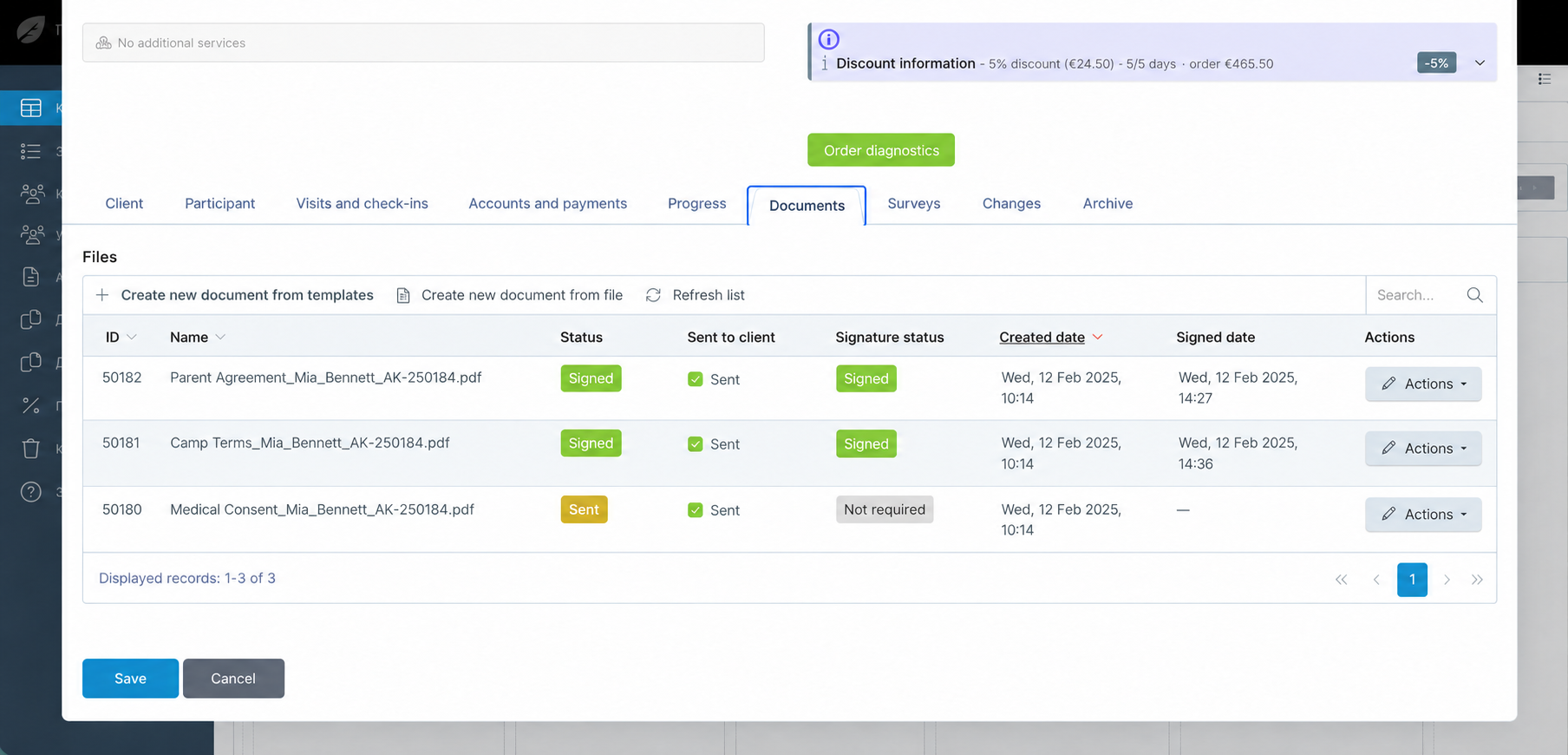
Seasonal paper contracts to sign and archive
One searchable digital record
Parties, status, date and time retained
Repeated requests across duplicate records
One valid questionnaire for the year
A new version is requested the following year
Separate records created by repeat applications
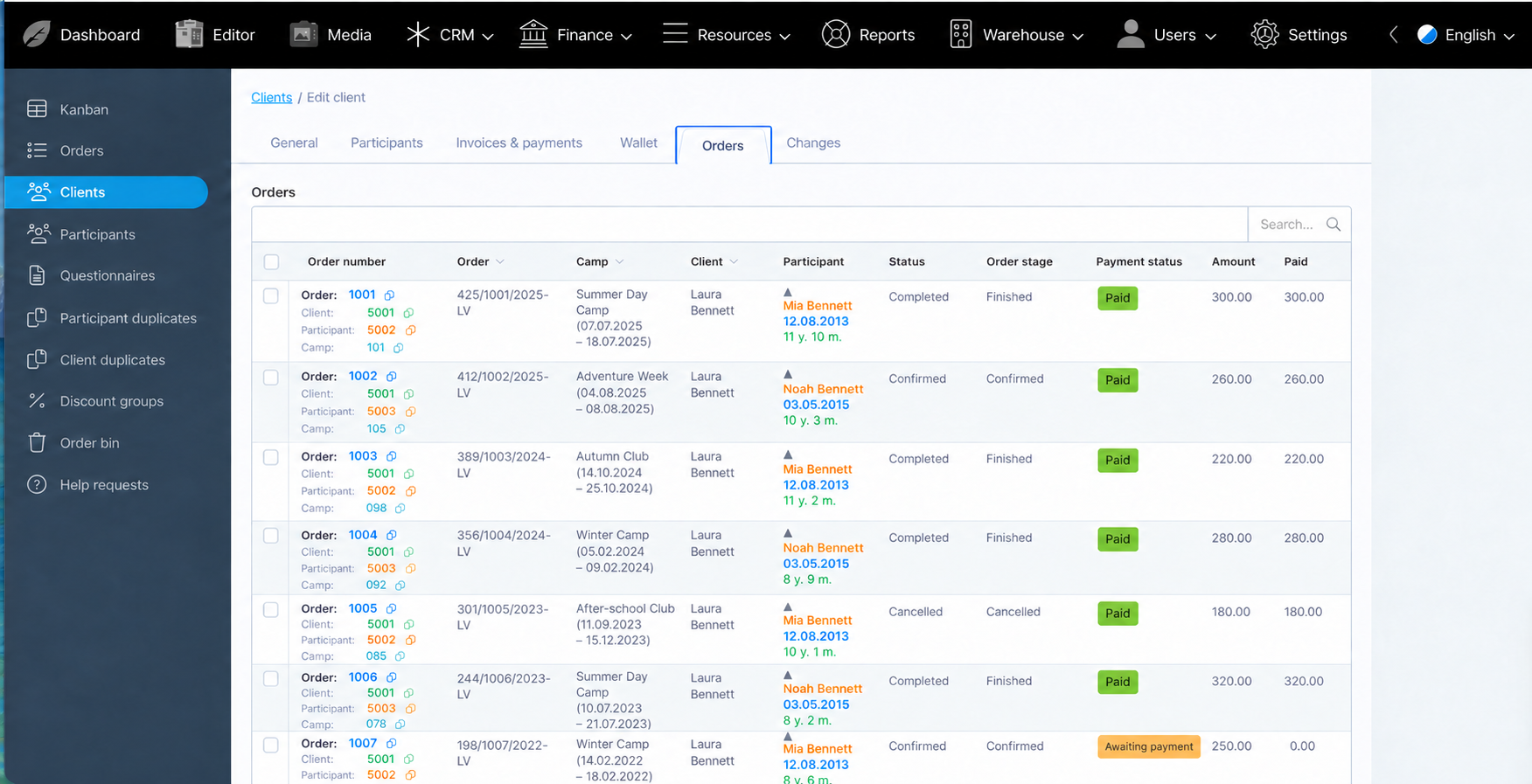
One connected family history
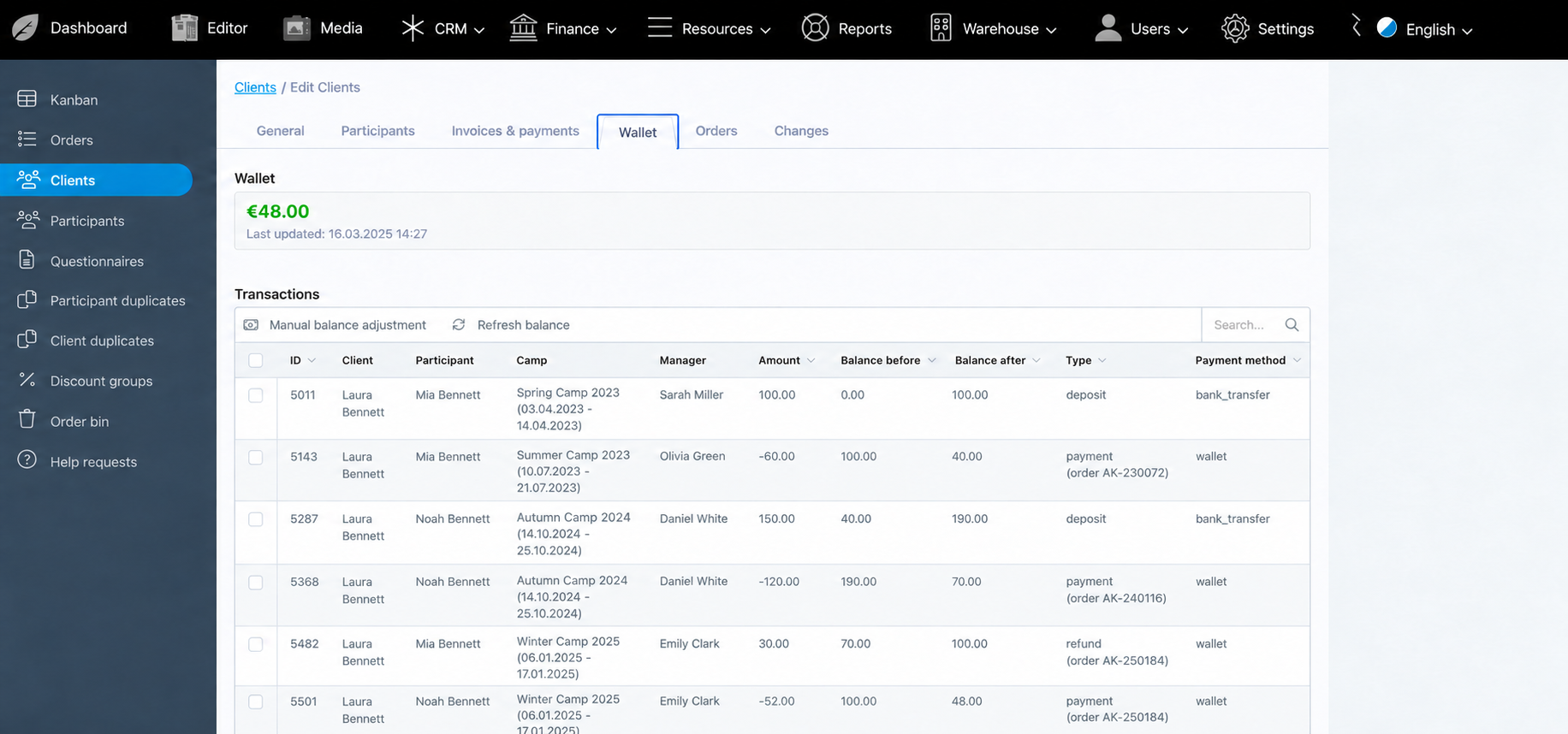
Children, orders, payments and visits remain linked
Selected days stored in individual order notes
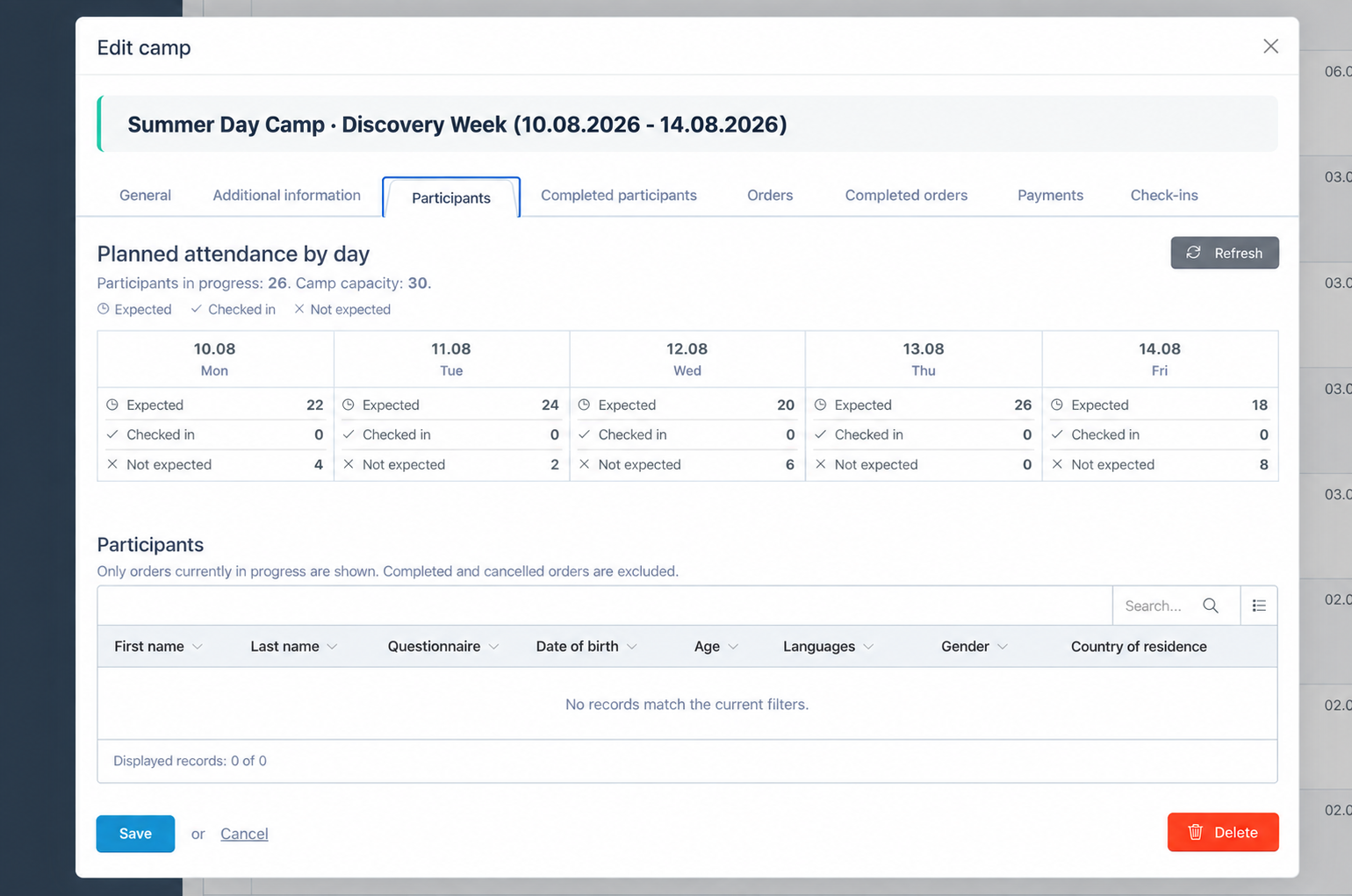
One daily attendance plan
Expected numbers visible for every date
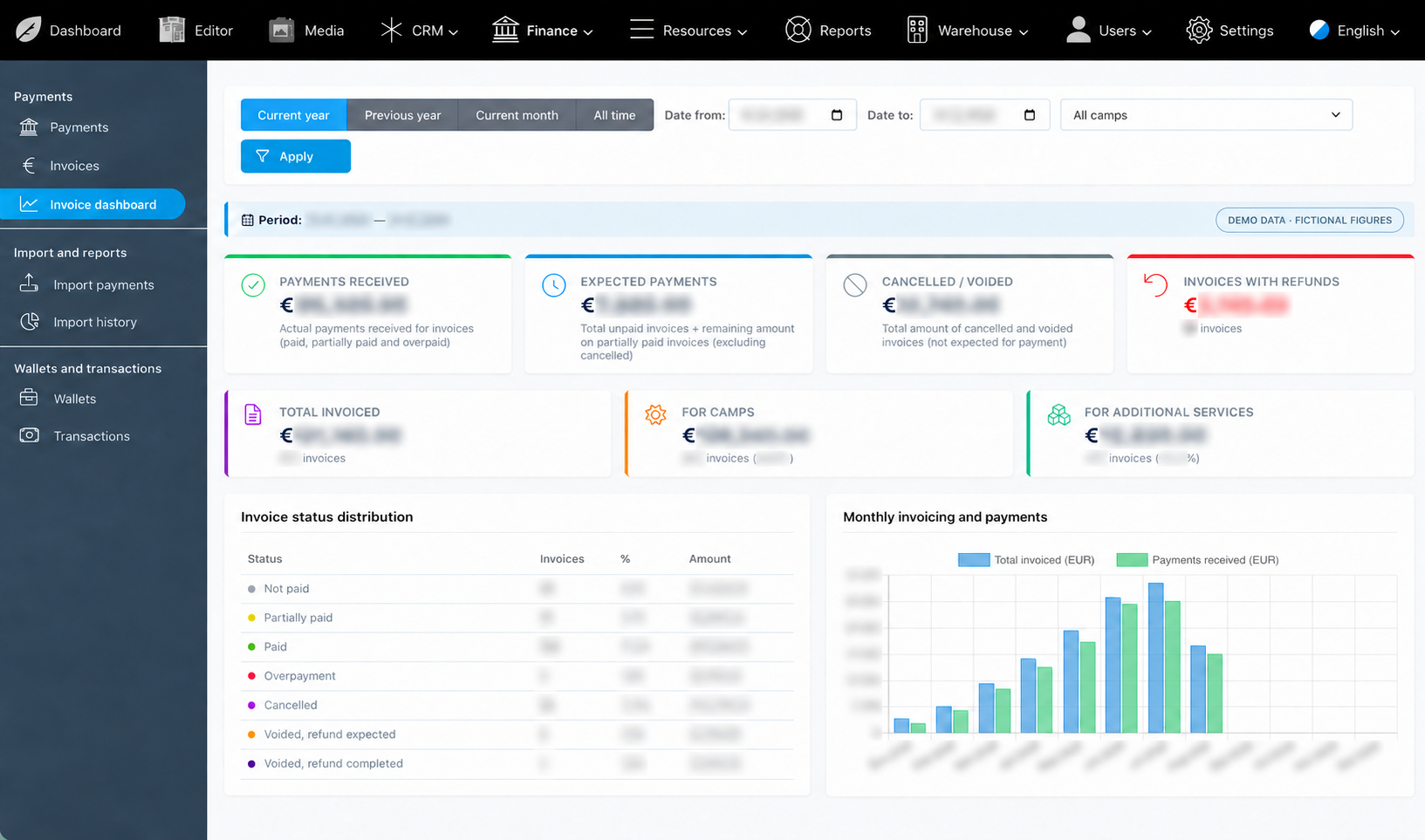
One combined total for different service types
Main and additional services shown separately
Fictional 2026 demo data
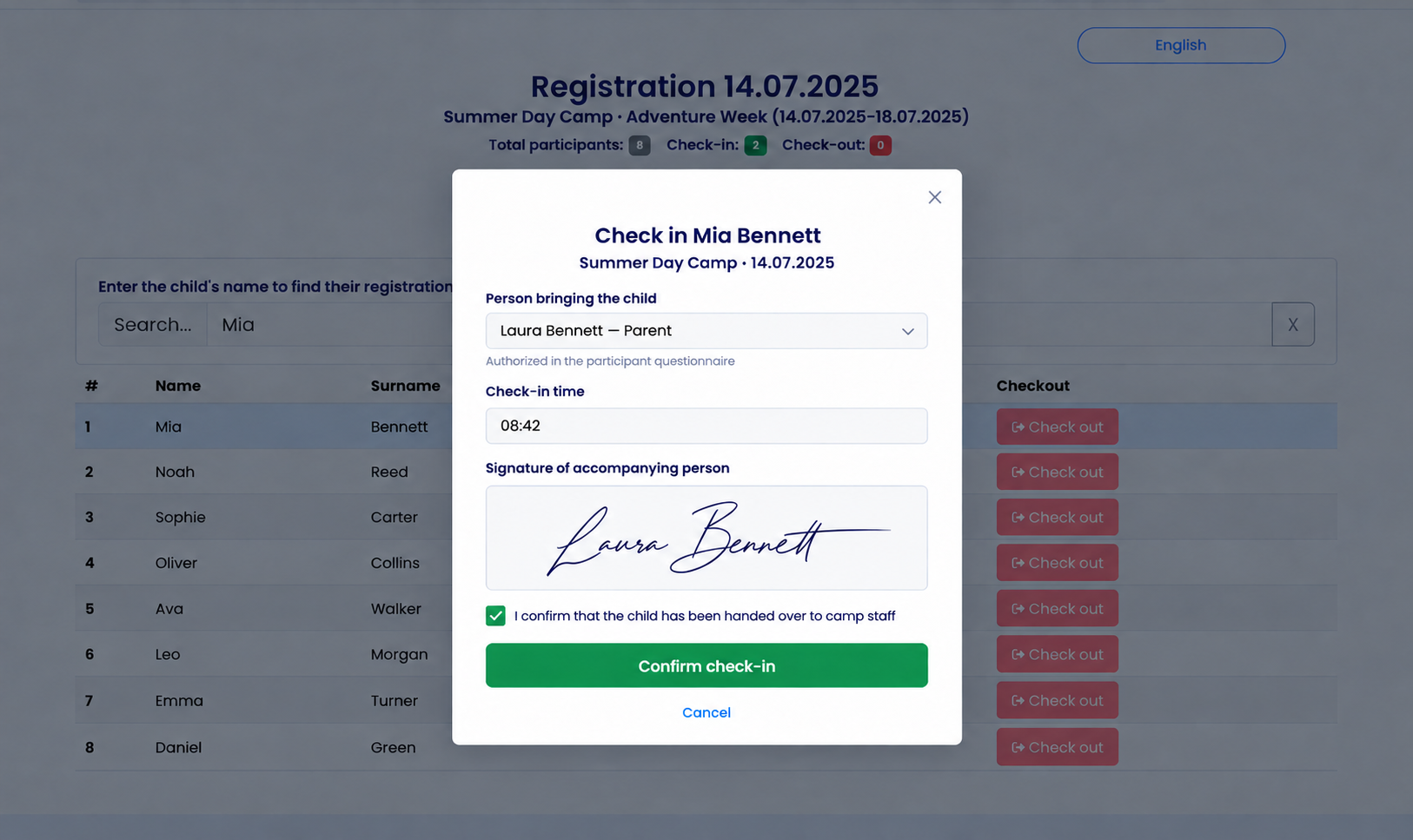
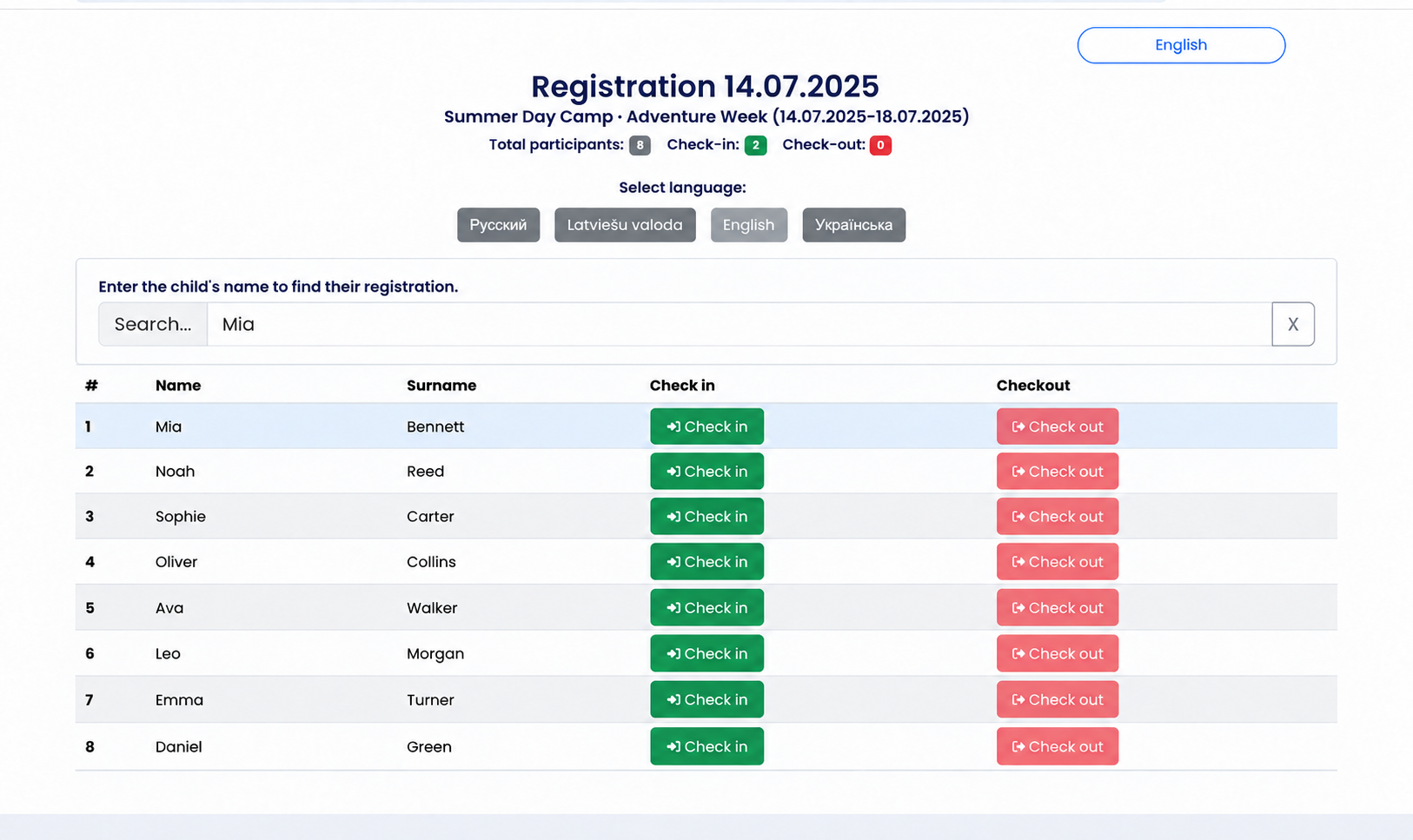
The public screen remains simple for parents. Behind it, the ERP retains the authorised person, time, signature and the order conditions that made check-in possible.
 Demo data · personal and financial details replaced
The parent enters the child’s name and sees the matching registration.
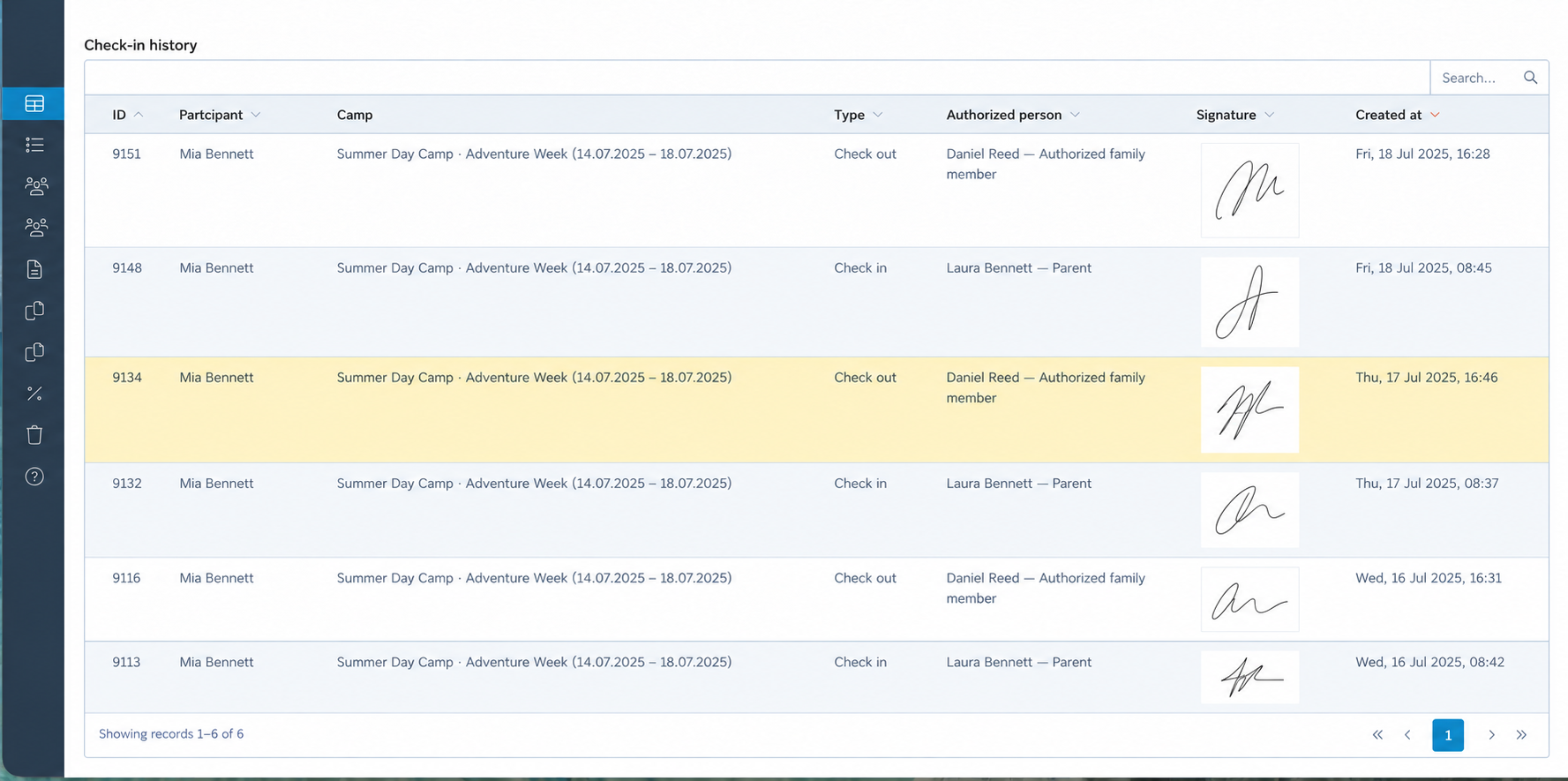
Demo data · personal and financial details replacedThe authorised person, time and signature are captured before confirmation.
 Demo data · personal and financial details replaced
Check-in and check-out events remain available as one chronological record.
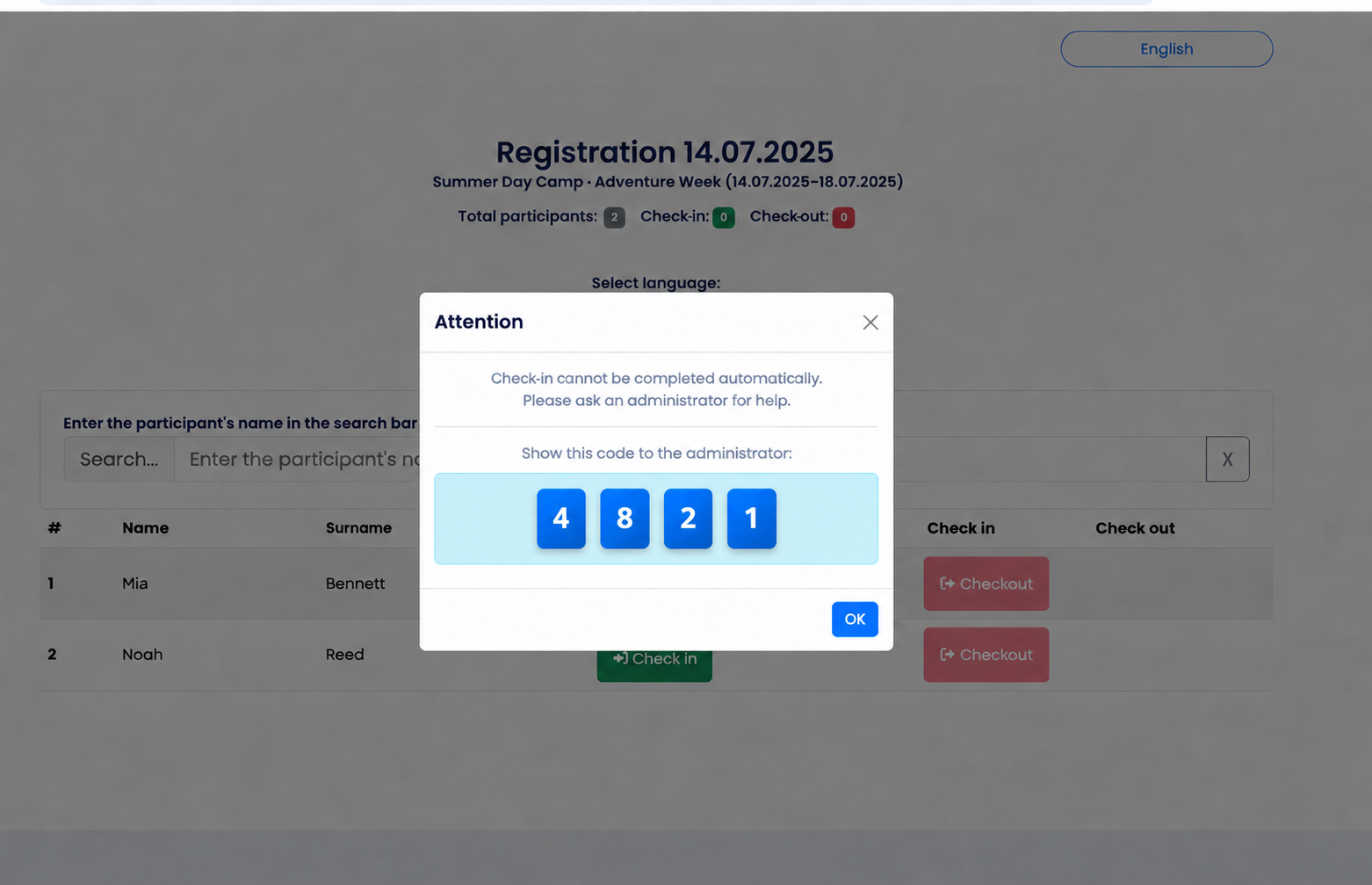
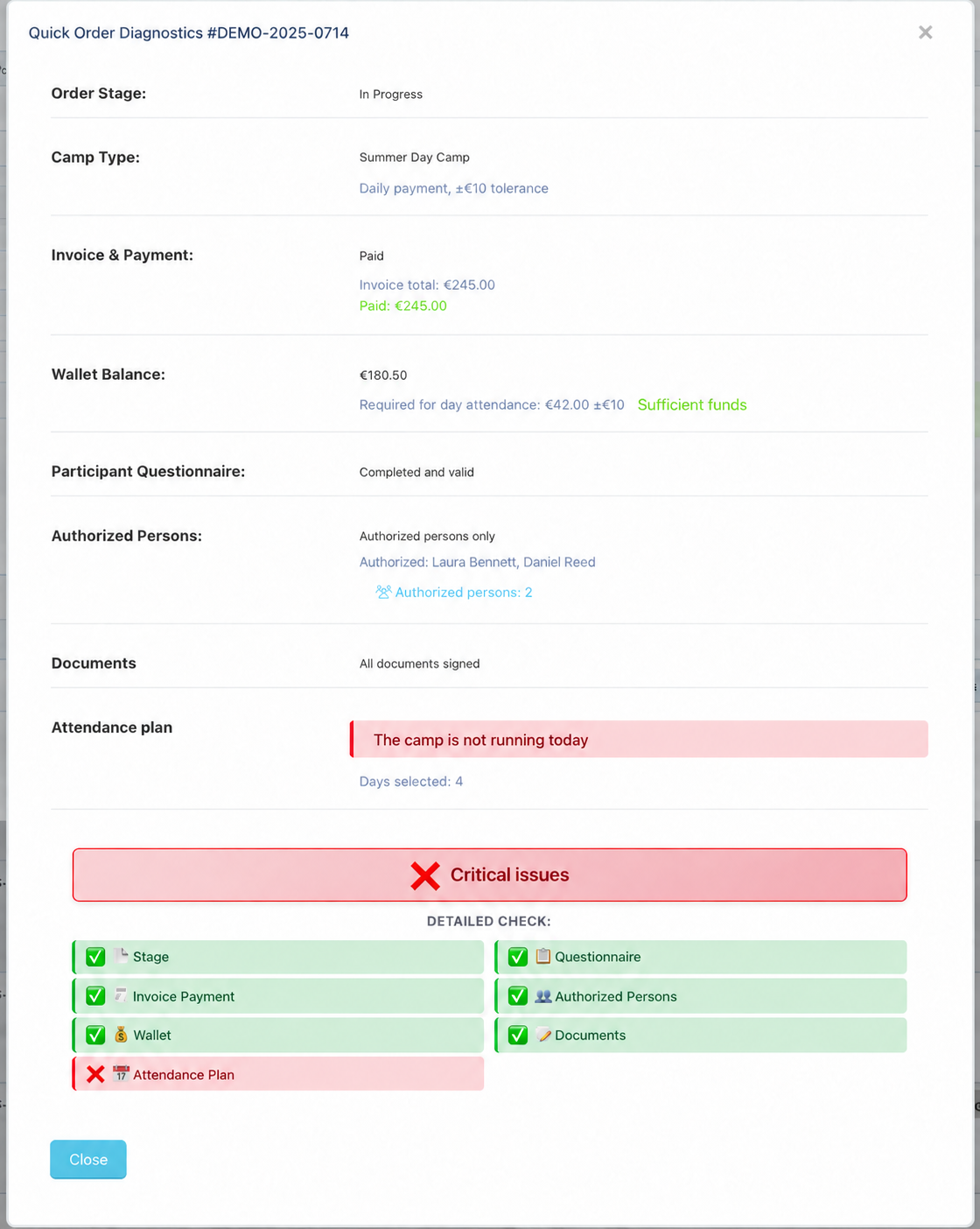
Payment, signed documents, a current questionnaire, authorised persons and the attendance plan can be checked automatically. If one condition fails, the parent receives a short code while the administrator sees the reason.
 Demo data · personal and financial details replaced
 Demo data · personal and financial details replaced
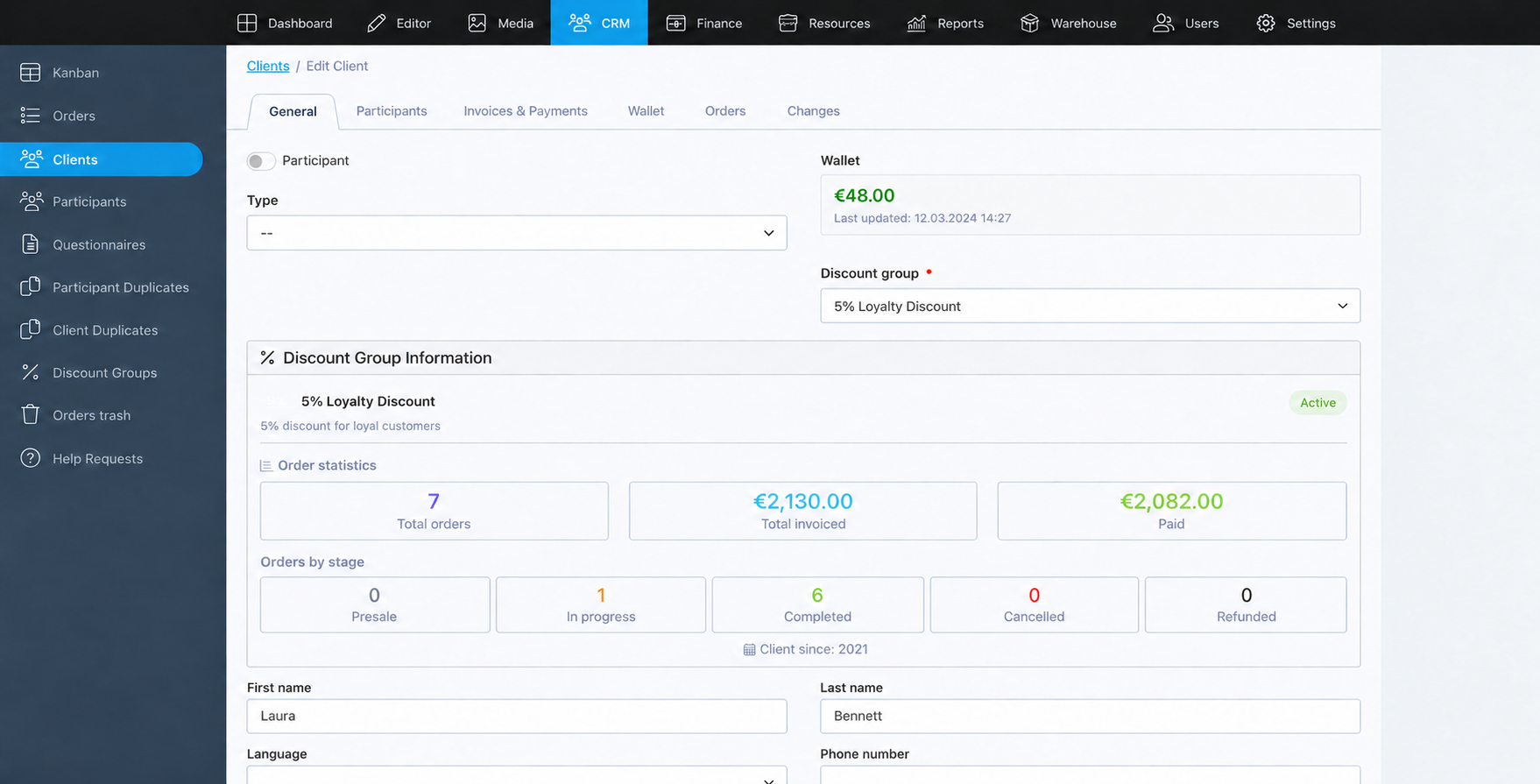
Consolidating duplicate records changed more than the database. It made loyalty, payments, documents and visits readable as a continuous relationship across children and seasons.
 Demo data · personal and financial details replacedDemo data · personal and financial details replaced
 Demo data · personal and financial details replaced
Days selected during booking feed the attendance plan and registration view. The team can see expected numbers for each date instead of collecting notes from individual orders.
Notes in each order
Daily plan in one view
 Demo data · personal and financial details replaced
Service invoices made transfers, excursions and other additions visible alongside the core camp product. Management can read both without losing the combined view.
Demo view · financial figures obscured
 Demo data · financial figures obscured
A family record carries history across children, bookings and seasons.
Readiness checks happen before a child is handed over.
Attendance plans connect sales with staffing and capacity decisions.
Payments, wallet movements and service invoices remain traceable.
The ERP can absorb new operating models without replacing the whole system.
“The strongest internal systems are not finished once. They keep absorbing the logic the business learns over time.”
We can explore which workflows should be preserved, connected or redesigned before deciding what to build.